
How to Plan for RMD Taxes in Retirement (2026)

Required minimum distributions (RMDs) can create a tax problem because withdrawals from traditional IRAs and 401(k)s are generally taxable income, even when you do not need the money. Planning ahead can help you coordinate RMDs with Social Security, investments, charitable giving, Roth conversions, and other retirement income decisions.
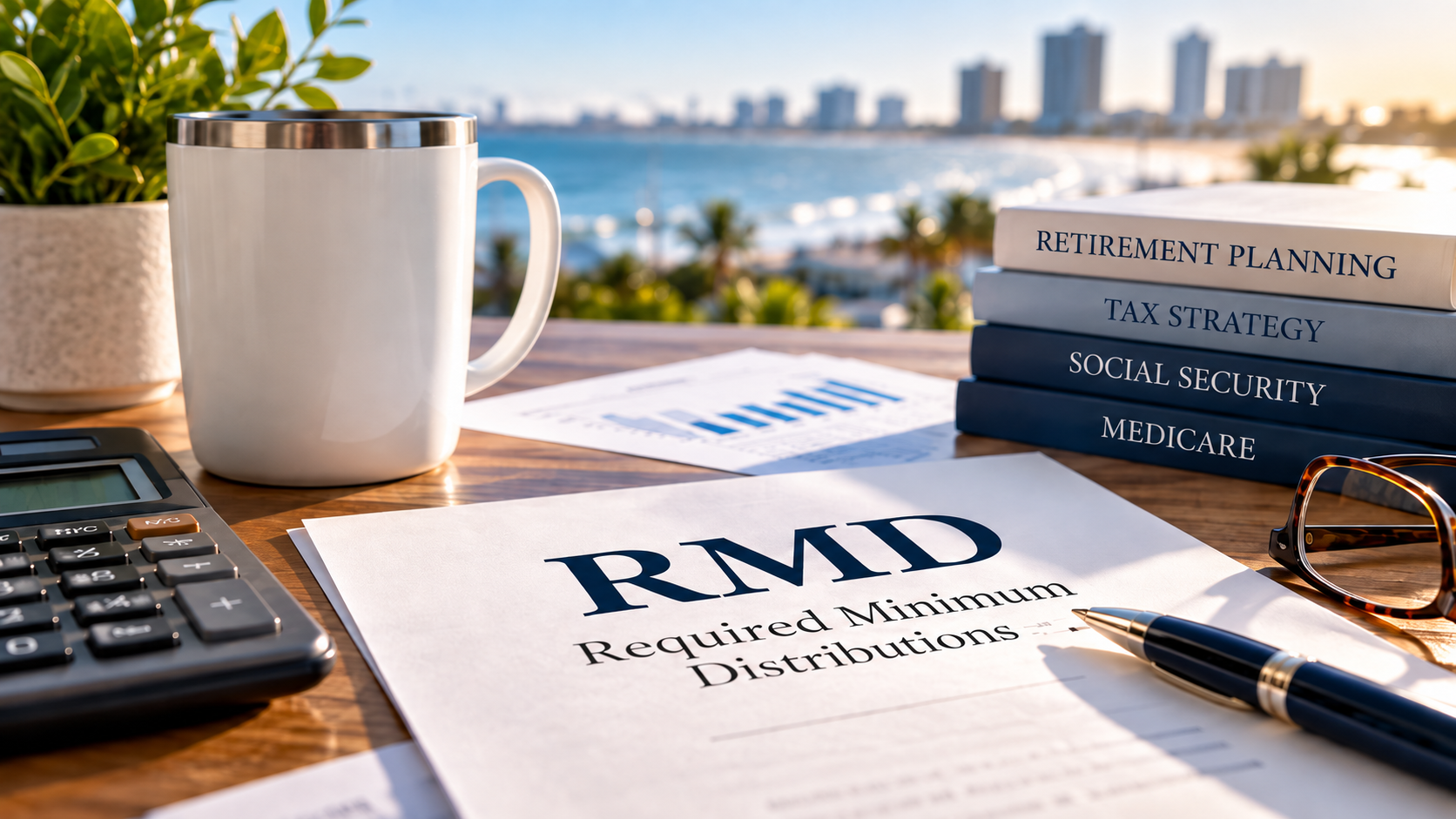
What are RMDs, and why can they raise your taxes?
Required minimum distributions are annual withdrawals that many owners of traditional retirement accounts must begin taking after reaching a specific age. The amount is generally calculated using your account balance and an IRS life-expectancy factor.
RMD rules can apply to:
- Traditional IRAs
- SEP IRAs and SIMPLE IRAs
- Most 401(k), 403(b), and other workplace retirement plans
- Inherited retirement accounts, depending on the beneficiary and circumstances
Roth IRAs generally do not require withdrawals during the original owner’s lifetime. However, Roth 401(k) rules and inherited Roth accounts can differ, so your account type and personal situation matter.
The important issue is that an RMD is usually included in taxable income. It may increase your federal income tax, affect your tax bracket, raise taxes on part of your Social Security benefits, and influence Medicare Part B and Part D premiums through income-related monthly adjustment amounts.
An RMD can create a tax problem even when your investment account has performed well or when you do not need additional cash. The money still may have to leave the tax-deferred account and be reported as income.
When do RMDs begin?
The starting age depends on your birth year and current tax law. Recent legislation changed the schedule, and future changes are possible. The first RMD deadline can also differ from the deadline for later years.
For that reason, do not rely only on a general rule of thumb. Confirm your required beginning date with your tax professional, plan administrator, or financial advisor. Missing an RMD or taking too little can result in a penalty, although correction rules and penalty relief may apply in some situations.
If you have multiple traditional IRAs, the calculation and withdrawal process can have specific rules. Employer plans may need to be handled separately. A written distribution calendar can help you avoid last-minute decisions and missed deadlines.
The tax issue many retirees overlook
Retirees often focus on the size of their portfolio, but the account location can be just as important. A large balance in tax-deferred accounts may represent future taxable income rather than completely spendable wealth.
Suppose you have income from several sources:
- Social Security
- A pension
- Interest and dividends
- Withdrawals from investment accounts
- Required minimum distributions
When these sources arrive together, an RMD may push your total income higher than expected. That can affect your marginal tax rate and the amount of income that remains available for spending.
The effect can also continue beyond one tax return. Higher income in one year may affect Medicare premiums later because Medicare commonly uses information from a prior tax year. It may also influence how much of your Social Security benefit is taxable.
How can you plan ahead for RMD taxes?
The best approach is usually coordinated planning rather than waiting until an RMD is due. Consider these strategies with the appropriate financial and tax professionals.
1. Project future income
Estimate future RMDs before they begin. Review current account balances, expected investment growth, pension income, Social Security, and planned withdrawals. A multi-year projection can show whether future RMDs may create unusually high-income years.
Use a range of assumptions rather than relying on one forecast. Markets change, spending changes, and tax laws may be revised. The goal is not to predict the future perfectly; it is to identify decisions that may deserve attention now.
2. Evaluate partial Roth conversions
A Roth conversion moves money from a traditional retirement account into a Roth account. The converted amount is generally taxable income in the year of the conversion, but qualified Roth withdrawals may receive different tax treatment later.
Conversions can be considered during lower-income years, such as after leaving work but before RMDs begin. They are not automatically beneficial. A conversion could increase current taxes, affect Medicare premiums, or create other consequences.
A useful analysis compares the cost of paying tax today with the potential value of reducing future tax-deferred balances. Your tax professional can help evaluate the conversion amount and its effect on your broader return.
3. Coordinate withdrawals across accounts
You may have taxable brokerage accounts, traditional IRAs, Roth accounts, cash reserves, and workplace plans. The order and timing of withdrawals can affect taxes and portfolio risk.
Instead of taking the same percentage from every account, consider how each withdrawal fits your income needs and tax situation. A coordinated plan may help you manage taxable income while preserving flexibility for later years.
This is one reason comprehensive retirement planning can be useful. RMDs should be considered alongside spending, investments, Social Security, healthcare costs, and estate goals.
4. Consider qualified charitable distributions
If you are charitably inclined and eligible, a qualified charitable distribution may allow money to move directly from an IRA to a qualified charity. When properly completed, it can satisfy all or part of an RMD and may be excluded from taxable income, subject to applicable rules and limits.
A qualified charitable distribution generally must be paid directly from the IRA to the eligible organization. Taking the distribution personally and donating it later may not produce the same tax treatment. Confirm the process before requesting a transfer.
5. Review beneficiaries and account structure
RMD planning is also part of legacy planning. Beneficiary designations, account types, ownership, and distribution rules can affect the tax experience of a surviving spouse or other heirs.
Review beneficiaries after major life events such as marriage, divorce, death, or a change in your estate plan. You can learn more about coordinating these decisions through estate and legacy planning .
What mistakes should retirees avoid?
Several common mistakes can make RMD planning more difficult:
- Waiting until December to decide how much to withdraw
- Assuming an RMD is optional because you do not need the cash
- Forgetting an old 401(k) or IRA from a former employer
- Treating all retirement accounts as if they follow identical rules
- Completing a Roth conversion without estimating the full tax effect
Another mistake is focusing only on this year’s tax bill. A strategy that lowers taxes today may create more taxable income later, while a strategy that increases taxes today may improve future flexibility. The right decision depends on your timeline, income, account balances, goals, and risk tolerance.
A practical RMD planning checklist
Before your next tax-planning conversation, gather:
- Current statements for every IRA and employer retirement account
- Your expected Social Security, pension, and other income
- Prior-year tax returns and estimated withholding
- Medicare premium information, if applicable
- Charitable giving plans and beneficiary designations
Then ask your advisor and tax professional:
- When do my RMDs begin?
- How much might they be under several reasonable scenarios?
- Could future RMDs affect my tax bracket or Medicare premiums?
- Should I evaluate Roth conversions, charitable distributions, or a different withdrawal sequence?
- How do these decisions fit my investment and estate plans?

How can Coast Wealth Management help?
RMD planning is most effective when it is connected to the rest of your retirement plan. Coast Wealth Management Group works with pre-retirees and retirees in Myrtle Beach, the Grand Strand, and throughout South Carolina to organize decisions around income, investments, taxes, Social Security, and legacy goals.
Our process is designed to make complex choices easier to understand. We can help identify questions to discuss with your tax professional, evaluate how account types fit together, and build a retirement income strategy that reflects your needs. We do not guarantee tax savings or investment results, and every recommendation depends on your circumstances.
If you are approaching RMD age or already taking distributions, schedule a complimentary retirement review to discuss what deserves attention now.
Frequently asked questions about RMD tax planning
Are RMDs always taxable?
RMDs from traditional tax-deferred accounts are generally included in taxable income. The treatment can vary for different account types, after-tax contributions, inherited accounts, and qualified charitable distributions. Ask a tax professional to review your records.
Can I reinvest an RMD?
If you do not need the money for spending, you may be able to invest it in a taxable account after taking the required distribution and addressing applicable taxes. It still generally counts as income in the year distributed.
Can I delay an RMD if I am still working?
Some workplace plans may allow certain employees to delay RMDs while still working, but rules can differ and an ownership exception may apply. Traditional IRAs generally follow different rules. Confirm your eligibility before delaying a distribution.
Should I take an RMD early in the year?
There is no universally best timing. Taking it early may reduce the chance of missing a deadline, while waiting may allow more time for funds to remain invested. Your cash needs, market exposure, tax withholding, and overall plan should guide the decision.
Key takeaways
RMDs can create a tax problem because required withdrawals may increase taxable income even when you do not need the money. The most useful planning often happens years before the first distribution.
Review future income, account balances, Roth conversion opportunities, charitable giving, withdrawal order, Medicare considerations, and beneficiaries together. If you are nearing RMD age, gather your account and tax information and discuss a multi-year strategy with your financial advisor and tax professional. Start early, compare options, and choose an approach that supports your retirement income and legacy goals.
Ready to Review Your Retirement Plan?
Our fiduciary advisors work with pre-retirees and retirees nationwide. No cost, no obligation — just a real conversation about your future.
Recent Posts